范文
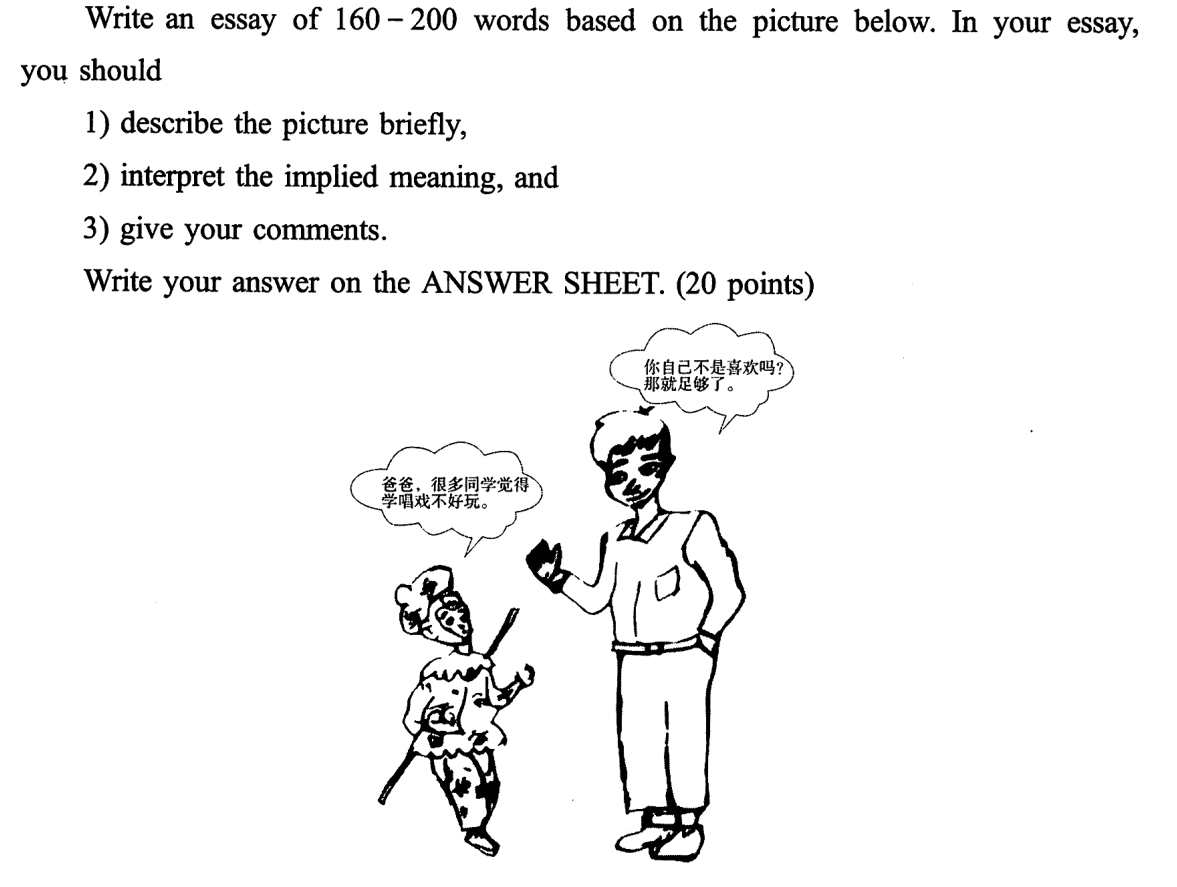
Though deceptively simple, this scene conveys a meaningful message**: A child dressed in traditional opera costume stands beside his father, holding a prop worriedly and saying, “Dad, many classmates think learning traditional opera is not fun,” while the father responds encouragingly, “Don’t you like it yourself? That’s enough.”** It serves as a compelling testament to the significance of cultural confidence.
It is widely acknowledged that in contemporary society, cultural confidence has garnered widespread attention due to its far-reaching implications. At the individual level, embracing this philosophy enables people to appreciate cultural heritage and cultivate refined tastes, ultimately contributing to deeper cultural identity and stronger sense of belonging. National policies on cultural heritage preservation and quality education development have emphasized that it empowers individuals to appreciate traditional wisdom and resist blind conformity to popular trends. Beyond personal advancement, this principle strengthens communities by reviving traditions and elevating public discourse, laying the groundwork for sustainable progress. This aligns with national strategies for promoting cultural confidence and self-strengthening and inheriting China’s fine traditional culture: when widely practiced, traditional arts gain modern audiences and cultural vitality flourishes, which benefits society as a whole.
In conclusion, it is evident that both individuals and communities benefit immeasurably when cultural confidence guides action. Promoting this principle is therefore not merely advisable—it is imperative for holistic development.
虽然这个场景看似简单,但传达了一个有意义的信息:一个穿着传统歌剧服装的孩子站在父亲身边,手里拿着道具,担忧地说:“爸爸,很多同学觉得学传统歌剧不有趣”,而父亲则鼓励地回应:“你自己难道不喜欢吗?够了。”它成为文化自信重要性的有力见证。
人们普遍认为,在当代社会中,文化自信因其深远影响而受到广泛关注。在个人层面,拥抱这一理念使人们能够欣赏文化遗产,培养精致品味,最终带来更深层的文化认同和更强的归属感。国家关于文化遗产保护和优质教育发展的政策强调,这赋予个人欣赏传统智慧、抵制盲目迎合流行趋势的能力。除了个人进步,这一原则还通过复兴传统和提升公共话语,强化社区,为可持续进步奠定基础。这与国家促进文化自信、自我强化和传承中国优良传统文化的战略相契合:当传统艺术广泛实践时,能够获得现代观众,文化活力蓬勃发展,惠及整个社会。
总之,显然,当文化信心引导行动时,个人和社区都能获得无比的益处。因此,推广这一原则不仅是明智之举——更是对整体发展至关重要。
作文详细拆解
一、图画描述撰写
使用公式:地点状语 + 主语 + 谓宾 + 现在分词 + 伴随状语
我的应用:
(省略地点状语,因为场景不明确)
A child dressed in traditional opera costume ← 主语+定语
stands beside his father, ← 谓语
holding a prop worriedly and saying, “…” ← 现在分词(动作+表情)
while the father responds encouragingly, “…” ← 对比回应
写作要点:用“worriedly”和“encourageingly”形成对比,“穿着传统歌剧服饰”强调传统文化元素,直接引用双方对话
二、填空内容选择
一、图画描述撰写
使用公式:地点状语 + 主语 + 谓宾 + 现在分词 + 伴随状语
我的应用:
(省略地点状语,因为场景不明确)
A child dressed in traditional opera costume ← 主语+定语
stands beside his father, ← 谓语
holding a prop worriedly and saying, “…” ← 现在分词(动作+表情)
while the father responds encouragingly, “…” ← 对比回应
写作要点:
用“worriedly”和“encouragingly”形成对比,“dressed in traditional opera costume”强调传统文化元素,直接引用双方对话
二、填空内容选择
【填空1 - 主题词】
选择:cultural confidence
来源:自己提炼
理由:贴合“传统文化+坚定自我”主题
【填空2 - 具体行为】
选择:appreciate cultural heritage and cultivate refined tastes
来源:文明类·个人行为
理由:直接使用,完美对应“学习国戏、欣赏传统文化”
【填空3 - 可见成果】
选择:deeper cultural identity and stronger sense of belonging
来源:文明类·个人成果(与2023年相同调整)
理由:文化自信带来的是“文化认同感”和“归属感”
【填空4 - 相关领域】
选择:cultural heritage preservation and quality education development
来源:文明类·政策领域
理由:组合两个领域,既涉及文化保护又涉及教育
【填空5 - 个人能力/行为】
选择:appreciate traditional wisdom and resist blind conformity to popular trends
来源:文明类·政策能力
调整:原文是“appreciate traditional wisdom and integrate it with modern life”,我改成“resist blind conformity to popular trends”(抵制盲目从众),直接呼应图中“很多同学觉得不好玩”
【填空6 - 社会效果】
选择:reviving traditions and elevating public discourse
来源:文明类·社会效果
理由:直接使用语料库原句
【填空7 - 相关战略】
选择:promoting cultural confidence and self-strengthening and inheriting China’s fine traditional culture
来源:文明类·相关战略
拼接:“推进文化自信自强”+“传承中华优秀传统文化”
【填空8 - 社会变化】
选择:traditional arts gain modern audiences and cultural vitality flourishes
来源:文明类·社会变化
调整:基于“traditional arts gain modern audiences”,加上“cultural vitality flourishes”
三、语料选择技巧应用
- 纯文明类语料
这道题100%使用文明类,因为核心是传统文化传承
- 关键微调
最重要的调整:填空5中加入“resist blind conformity to popular trends”
理由:直接回应图中“很多同学觉得不好玩”的从众压力
- 强调文化自信
所有表达都围绕“文化认同”和“传统文化价值”展开
四、这道题的独特之处
- 父子对话的处理
必须体现“父亲的正面引导”
用“worriedly”和“encouragingly”形成情绪对比
- 核心冲突
外部压力(同学觉得不好玩)vs 内在热爱(自己喜欢)
主题词必须支持“坚持内在热爱”
- 文化传承的代际性
图中是父亲引导孩子,体现文化传承
所以要强调“传统文化的延续”
五、避坑指南
❌ 错误写法:
写成“independent thinking”(独立思考)→ 太宽泛,没抓住“文化”核心
写成“pursuing hobbies”(追求爱好)→ 太个人化,不符合宏大叙事
写成“resisting peer pressure”(抵制同辈压力)→ 角度偏负面
✅ 正确写法:
cultural confidence → 准确、正面、符合政治化趋势
六、【总结】
字数:198词
核心逻辑:
- 图画展示传统文化学习中的从众压力
- 父亲引导孩子坚定文化自信
- 从个人文化认同→政策支持→社会文化复兴→国家战略
- 强调文化自信对个人和社会的重要性
关键创新点:
- 填空5加入“resist blind conformity”直击图画核心矛盾
- 所有表达紧扣“文化自信”和“传统文化传承”