讲解视频
范文
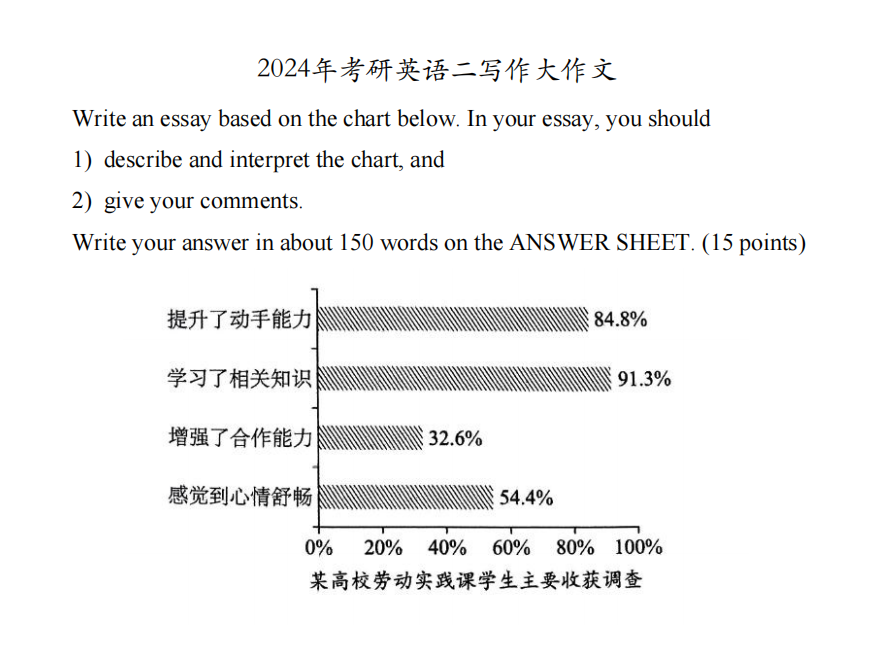
With the dazzling figures, the bar chart conveys several fundamental differences concerning the main gains of students in labor practice courses at a certain university. The prominent fact is that learning related knowledge, accounting for 91.3%, surmounts its counterparts to be the highest proportion, while improving practical ability, feeling happy and enhancing cooperation ability constitute 84.8%, 54.4% and 32.6% respectively. It serves as a compelling testament to the significance of comprehensive quality education.
It is widely acknowledged that in contemporary society, comprehensive quality education has garnered widespread attention due to its far-reaching implications. At the individual level, embracing this philosophy enables students to bridge the gap between knowing and doing, ultimately contributing to enhanced intellectual capacity and a sense of fulfillment. National policies on quality education development have emphasized that it empowers individuals to connect genuinely with others and nurture community bonds. Beyond personal advancement, this principle strengthens communities by fostering cooperation and enhancing cohesion, laying the groundwork for sustainable progress. This aligns with national strategies for fostering virtue through education and cultivating well-rounded individuals: when widely practiced, mutual assistance becomes commonplace and social trust deepens, which benefits society as a whole.
In conclusion, it is evident that both individuals and communities benefit immeasurably when comprehensive quality education guides action. Promoting this principle is therefore not merely advisable—it is imperative for holistic development.
作文详细拆解
一、主题词是怎么想到的?(思路还原)
这道题经历了一次深度的逻辑校准。最初我们容易把“劳动”等同于“职业培训”,但仔细看图表,会发现两个必须回应的“软性数据”。
第一步:发现数据矛盾(读图)
硬数据: “知识”(91.3%) 和 “动手能力”(84.8%) 双高。-> 说明是“知行合一”。
软数据: “心情舒畅”(54.4%) 和 “合作能力”(32.6%)。
思考: 如果只是练技能(工匠精神),为什么会快乐?为什么会涉及合作?
结论: 这种劳动往往是集体性的(如校园清扫、支教、义工),它带有社交属性和公益属性。
第二步:逻辑修正(归类)
旧思路(舍弃): 走【敬业】路线,强调“工匠精神/职业标准”。-> 缺点:把大学生写成了技工,无法解释“快乐”。
新思路(采用): 走【文明+和谐】路线。
个人层面:强调“知行合一”(解决知识+技能)。
社会层面:强调“人际连接与互助”(解决快乐+合作)。
最佳切入点: 这就是国家提倡的 “全面素质教育”——既能干活,又能通过劳动融入集体、获得快乐。
第三步:组合出拳(定词)
最终定词: Comprehensive Quality Education(全面素质教育)。
二、语料库具体运用(跨库混打策略)
这篇作文展示了极高的语料调用技巧:个人段落用【敬业】写硬实力,社会段落用【和谐】写软实力。
核心主题:
填空: comprehensive quality education(全面素质教育)。
来源: 【1️⃣ 文明】
个人行为(回应硬数据):
逻辑: 对应91.3%(知)和84.8%(行)。
填空: bridge the gap between knowing and doing(缩小知与行的差距)。
来源: 【3️⃣ 敬业】(完美适配)。
可见成果(回应软数据):
逻辑: 对应54.4%(快乐)。
填空: enhanced intellectual capacity and a sense of fulfillment(智力提升和充实感)。
来源: 微调自【文明】/【和谐】。
政策能力(关键转折):
逻辑: 为什么劳动会快乐?因为在劳动中和同学建立了关系。
填空: connect genuinely with others and nurture community bonds(真诚连接他人,培育社区纽带)。
来源: 【2️⃣ 和谐】(这一招非常高明,把“劳动”变成了“社交/团建”)。
社会效果(回应合作):
逻辑: 直接对应图表中的32.6%(合作)。
填空: fostering cooperation and enhancing cohesion(促进合作并增强凝聚力)。
来源: 【2️⃣ 和谐】(直接命题)。
相关战略(定海神针):
逻辑: 教育的终极目标。
填空: fostering virtue through education and cultivating well-rounded individuals(立德树人,培养全面发展人才)。
来源: 【1️⃣ 文明】。
社会变化(终极愿景):
逻辑: 这种教育普及后,社会变得更有爱了。
填空: mutual assistance becomes commonplace and social trust deepens(互助成风,社会信任加深)。
来源: 【4️⃣ 友善】。
三、常见“坑”与避雷指南
- 不要把“劳动课”写成“岗前培训”
错误做法: 大量使用 professional standards(职业标准)、craftsmanship(工匠精神)。
风险: 阅卷老师会觉得你跑题了。这是高校(University)的通识课,不是职业技术学院的实训课。重点是“育人”而非“制器”。
- 不要无视图表中的“情感数据”
错误做法: 只字不提“快乐”和“合作”,只谈“知识”和“技能”。
后果: 论证显得干瘪、功利。解释“为什么劳动让人快乐”是这篇作文拿高分的关键——因为劳动创造了人与人的连接(Harmony)。
四、高分技巧(提分点)
- 逻辑分层(Layering)
这篇作文的逻辑层次非常漂亮:
第一层(个体): 讲“能力” —— 解决“知行合一”的问题。
第二层(群体): 讲“关系” —— 解决“和谐互助”的问题。
这种 “能力+关系=全面发展” 的公式,是所有教育类话题的通解。
- 巧用【和谐】库解决“快乐”难题
很多同学看到“快乐”只想写 make them happy。太低幼了。
用【和谐】库里的 nurture community bonds(培育社区纽带)和 social trust(社会信任)来解释快乐,瞬间把立意拔高到了社会学层面:快乐源于对他人的贡献和融入。
- 战略句的“万金油”属性
再次强调, fostering virtue through education…(立德树人)这句话,2025年考教育类话题(如读书、运动、劳动、心理健康)全部通用,务必背熟。
五、总结
这篇“终极修正版”范文,完美示范了如何“用数据反推逻辑”。
看到“知识+动手” -> 调用【敬业】的“知行合一”。
看到“快乐+合作” -> 调用【和谐】的“社区纽带”。
最后用“全面素质教育”的大帽子把它们扣在一起。
这不再是一篇简单的看图说话,而是一篇有血有肉、逻辑严密的教育分析短文。