第九日:图表-2023年英二
2023年考研英语二图表大作文套写范文与详细拆解。 初复试大观系列及配套资料全部免费开源,发布于:@南萧时刻自信冷静(B站首发),直达链接:https://space.bilibili.com/116251406
套写示例(每日更新一年真题)讲解视频
范文
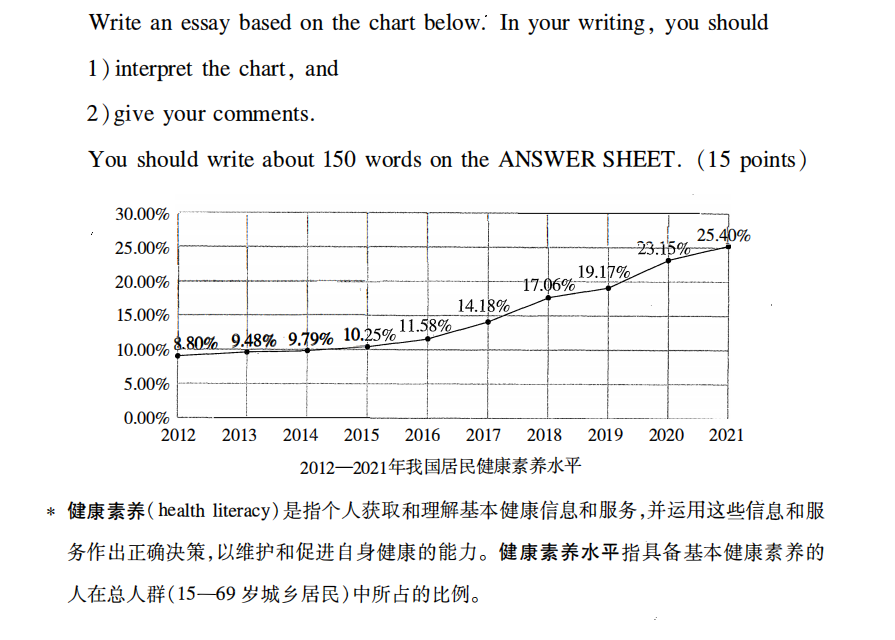
With the dazzling figures, the line chart conveys several fundamental changes concerning the health literacy level of Chinese residents. During the period between 2012 and 2021, the proportion of residents with basic health literacy, as is displayed, soared from about 8.80% to around 25.40%. This upward trend serves as a compelling testament to the achievements of socio-economic development.
It is widely acknowledged that in contemporary society, socio-economic development has garnered widespread attention due to its far-reaching implications. At the individual level, embracing this philosophy enables people to benefit from economic growth and upgraded facilities, ultimately contributing to improved health, education, and living standards. National policies on public health and well-being have emphasized that it empowers individuals to access improved public services and enjoy better infrastructure. Beyond personal advancement, this principle strengthens communities by creating accessible facilities and livable environments, laying the groundwork for sustainable progress. This aligns with national strategies for promoting high-quality development and the Healthy China initiative: when widely practiced, infrastructure gaps narrow and living conditions improve universally, which benefits society as a whole.
In conclusion, it is evident that both individuals and communities benefit immeasurably when socio-economic development guides action. Promoting this principle is therefore not merely advisable—it is imperative for holistic development.
作文详细拆解
一、主题词是怎么想到的?(思路还原)
拿到这道题,很多同学的第一反应是写“人们越来越重视健康”,这没错,但不够“高”。官方的试题分析明确要求:“立足新时代十年我国社会经济发展成就,分析原因”。
第一步:看数据趋势(读图)
数据从 2012 年的 8.80% 一路飙升到 2021 年的 25.40%。
这是一个持续的、稳步的增长。
第二步:深挖根本原因(归类)
为什么大家突然有钱健身了?为什么社区里有健康宣传栏了?为什么医院的服务更好了?
根本原因: 国家的钱袋子鼓了,社会经济发展了,基础设施完善了。
逻辑链条: 经济发展(因) -> 设施/教育/服务提升(中介) -> 居民健康素养提高(果)。
第三步:靠语料(定词)
我们需要一个能概括“国家有钱、设施变好”的大词。
**【**6️⃣ 富强 Prosperity】 语料库是最佳选择。
**同时,为了不脱离“健康”这个话题,我们需要在关键填空处混入 【**2️⃣ 和谐 Harmony】(公共卫生)的内容。
最终定词: Socio-economic development(社会经济发展)。
二、语料库具体运用(富强+和谐 混打版)
这篇作文展示了如何以【富强】为主轴,【和谐】为辅助,构建一个严密的逻辑闭环。
核心主题(总):
逻辑: 这一切进步背后的推手是谁?
填空: socio-economic development(社会经济发展)。
来源: 【6️⃣ 富强】。
具体行为(个人受益):
逻辑: 经济发展了,老百姓具体得到了什么?
填空: benefit from economic growth and upgraded facilities(受益于经济增长和设施升级)。
来源: 【6️⃣ 富强】。这解释了提升健康素养的物质基础。
可见成果(健康提升):
逻辑: 设施好了,结果是什么?
填空: improved health, education, and living standards(健康、教育和生活水平的提高)。
来源: 【6️⃣ 富强】。注意这里涵盖了 health,紧扣图表。
政策领域(点题):
逻辑: 具体到哪个领域的政策?
填空: public health and well-being(公共卫生与健康)。
来源: 【2️⃣ 和谐】。关键一步! 这里必须把话锋转回“健康”,防止阅卷老师觉得你在空谈经济。
个人能力/行为(享受服务):
逻辑: 政策让个人能干什么?
填空: access improved public services and enjoy better infrastructure(获得更好的公共服务,享受更好的基础设施)。
来源: 【6️⃣ 富强】。
社会效果(环境改善):
逻辑: 社区变得怎么样了?
填空: creating accessible facilities and livable environments(创建无障碍设施和宜居环境)。
来源: 【6️⃣ 富强】。
相关战略(双剑合璧):
逻辑: 必须同时提到“发展”和“健康”。
填空: promoting high-quality development and the Healthy China initiative(推动高质量发展和健康中国)。
来源: 【6️⃣ 富强】+【2️⃣ 和谐】。这是全篇最高光的时刻,双战略叠加,政治站位极高。
社会变化(宏观景象):
逻辑: 十年成就的最终体现。
填空: infrastructure gaps narrow and living conditions improve universally(基础设施差距缩小,生活条件普遍改善)。
来源: 【6️⃣ 富强】。
三、常见“坑”与避雷指南
- 严禁只谈“个人意识”
错误做法: 全篇都在写“我们要多读书、多看报、少吃油腻”。
后果: 立意太浅。这可是“新时代十年”的宏大考题,只写个人习惯显得格局太小,不符合“讲好中国故事”的要求。
- 动态图描述公式不要错
易错点: 2023年是折线图(Line Chart),必须用时间段描述。
正确公式: During the period between 2012 and 2021, the proportion… soared from… to…。
禁忌: 千万别用柱状图的 surmounts(超过),因为这里强调的是“飙升”的过程,而不是“比大小”。
- 不要忘记“回扣主题”
风险: 写【富强】语料时,容易写嗨了,全篇都在讲经济、基建、GDP。
补救: 必须在第四空(政策领域)和第七空(战略) 强行插入 Health 相关的词(如 Public Health, Healthy China)。这是防止跑题的“安全绳”。
四、高分技巧(提分点)
- 因果逻辑升华
普通作文:因为大家爱健康,所以素养高。(个人层面)
满分作文:因为国家经济腾飞,提供了更好的医疗和设施,所以大家才有条件追求健康。(国家层面)
这种“经济基础决定上层建筑”的逻辑,是考研政治和英语写作通用的高分逻辑。
- 战略词汇的精准打击
the Healthy China initiative(健康中国)是这道题的必得分点。
high-quality development(高质量发展)是这道题的加分点。
能把这两个词揉在一个句子里写出来,阅卷老师会认为你的时政敏感度非常强。
五、总结
这篇作文是“万能模板”灵活性的证明。 我们没有为了迎合题目去生造关于“看病、吃药”的难句,而是直接调用了【富强】库里关于“基础设施、生活水平”的高级表达,只是在关键节点插上了“健康”的标签。
结论: 只要国家在进步,只要老百姓日子在变好,【6️⃣ 富强】语料库几乎可以解释一切正向增长的数据(无论是健康、教育、还是消费)。